When people go to perform Hajj, there are many people walking and performing rituals together. Respiratory Infections during Hajj might spread quickly from one person to another. So we need to take proper care of ourselves to avoid these infections.
Pre-Travel Preparation
- Make sure routine and recommended vaccinations are done before departure.
- Take a health kit with you which should include your regular medicines, a thermometer, hand sanitizer, tissues, and disposable masks.
- Get medical advice before departure if you have issues like asthma, diabetes, and heart disease.
Daily Hygiene and Mask Use
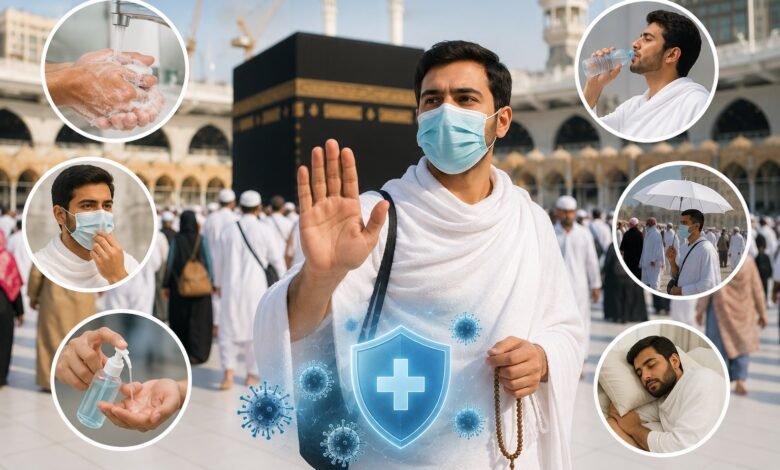
Wash your hands regularly with soap and water and use sanitizers after touching surfaces and before eating when you are outside. This is one of the best hygiene practices during hajj. Use masks in crowded places and keep replacing masks every 5-6 hours. Also, cough or sneeze into a tissue paper, discard the tissue and clean your hands properly.
Avoiding Close Contact with People
Avoid close contact with people who are coughing, sneezing, or appear to be ill. Keep your distance or move towards less crowded area if possible. Choose well ventilated spaces or open windows when you are resting in shared places.
Hydration, Rest, and Taking Precautions
Health precautions for Hajj pilgrims are really important. Drink water on regular basis, avoid sun exposure, and take rest when tired. Dehydration and fatigue can weaken the ability to defend the virus. Eat healthy and cleanly prepared foods, get enough sleep, and avoid too much physical activity where you feel exhausted.
Recognizing Symptoms
Fever, shortness of breath, sore throat, sudden respiratory problems, or cough are early symptoms. Visit the nearest clinic if you feel any of these symptoms to get yourself treated before the condition worsens.
If you are not well, wear a mask, do not come in contact with people unnecessarily.
Non-Pharmaceutical Measures and Tips
- Avoid touching face regularly
- Disinfect the items you use in sharing like bottles, handles, and plates.
- Choose properly cooked food and safe drinks.
Shared Accommodation Risks
Sharing sleeping spaces, bathrooms, and common areas is one of the biggest challenges during Hajj. Germs can spread quickly when we touch a surface which was also touched by many other pilgrims. This is why how to stay healthy in crowded hajj conditions is not just one precautionary major but many small precautions taken all the time.
Avoid Sharing Personal Items
The best way for preventing cough and flu while performing Hajj is not to share your bottles, cups, masks, and towels with other pilgrims. These items can spread germs quickly and transmit from one person to another.
Early Action is important
Many pilgrims ignore early symptoms thinking that it is just a minor issue. However, a minor fever, sore throat, or cough can sometimes turn into serious problems if ignored at start. Knowing when to take proper rest, have proper food, and seeking medical help at even minor inconvenience are the most important ways to avoid getting sick during Hajj.
See also: The Secret Ingredients for a Brighter Smile: Nutrition for Dental Health
Stay Consistent Throughout the Journey
Being careful every day is important and the best way to avoid infections during Hajj. you can not just get vaccinated and avoid daily precautionary majors and not get any infections. Washing hands, wearing a mask in crowds, avoiding close contact with unwell people, staying hydrated and getting enough rest will all work together to keep you healthy throughout the journey.
Pilgrims looking for updated travel requirements and complete planning information can also refer to the official Hajj resources provided by Shamco Travels before departure.