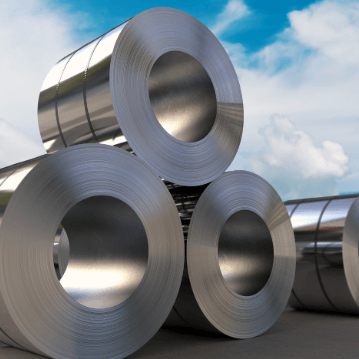
Industrial operations from steel mills and paper plants to glass manufacturers and construction product suppliers rely on industrial steel strapping to secure their heaviest, sharpest, and most challenging loads. The properties that make steel strapping unique — high tensile strength, minimal elongation, and exceptional edge resistance — are exactly what demanding industrial applications require. This guide covers everything industrial buyers need to know about specifying, purchasing, and using steel strapping effectively.
Why Industries Choose Steel Strapping
The choice of steel over plastic strapping for heavy-duty applications comes down to physics and economics. Steel’s tensile modulus is approximately 30 times higher than polyester, meaning it stretches far less under load. This characteristic maintains consistent clamping force on dense, heavy loads throughout the shipping journey.
Industries That Depend on Steel Strapping
Steel strapping is essential in metals processing (coil and sheet steel, pipes, and structural sections), paper and board manufacturing, glass manufacturing, brick and building materials, heavy machinery, and lumber. Each industry has specific requirements that drive strapping specifications.
Applications Where Steel Outperforms Plastic
Hot loads from industrial processes cannot use plastic strapping, which would deform or fail at elevated temperatures. Sharp-edged metal loads require the edge resistance of steel. Extremely dense loads that would cause plastic to creep and lose tension over time also need steel’s dimensional stability.
- Coiled steel sheet and coil products
- Pipe, tube, and structural steel bundles
- Granite, marble, and heavy stone products
- Glass sheets and windshields
- Heavy machinery and equipment
- Baled paper, cardboard, and waste materials
Selecting the Right Steel Strapping Specification
Selecting the correct steel strapping specification requires understanding the load weight, edge characteristics, strapping method, and seal type. Over-specifying wastes material and increases cost; under-specifying risks load failure with potentially severe consequences.
Working Load vs. Break Strength
Never specify strapping based on its break strength alone. Working load should be no more than 50% of break strength to maintain an adequate safety margin. Consider also the number of straps required to distribute the load appropriately.
Equipment for Industrial Steel Strapping Applications
Manual steel strapping tools are suitable for occasional use and remote applications. Pneumatic tensioning and sealing tools dramatically increase productivity for medium-volume applications. Fully automatic strapping machines provide the highest throughput for production line applications.
- Manual combination tools for portability and versatility
- Battery-powered tools for cordless flexibility
- Pneumatic tools for high-speed production applications
- Semi-automatic machines for medium-volume packaging lines
- Fully automatic machines for high-volume production integration
See also: Want to Become a Successful Businessowner? Here’s 5 Things You Need
Frequently Asked Questions
How many straps do I need to secure a heavy load?
The number of straps required depends on load weight, strap working load, and load distribution. A qualified packaging engineer can calculate the required strap count and placement pattern to ensure load security under actual transport conditions.
What are edge protectors and when should they be used with steel strapping?
Edge protectors are rigid angles of plastic, metal, or corrugated material placed between strapping and load corners to distribute strap tension and prevent damage to the load or to the strap. They are recommended when strapping around sharp or fragile edges.
Is steel strapping affected by temperature changes during shipping?
Extreme temperature changes can cause some variation in strap tension due to differential thermal expansion between the load and strap. This is rarely a practical issue with steel strapping, as its temperature coefficient of expansion is similar to most metal loads it secures.
Conclusion
Industrial steel strapping is a specialized product that demands a correspondingly specialized approach to specification, procurement, and application. industrial steel strapping. By understanding the unique properties that make steel strapping the right choice for heavy industrial loads, and by selecting the correct grade, width, and thickness for your specific applications, you can ensure reliable load security from production through final delivery. Partner with experienced suppliers who understand your industry’s specific challenges and can provide both products and expertise.